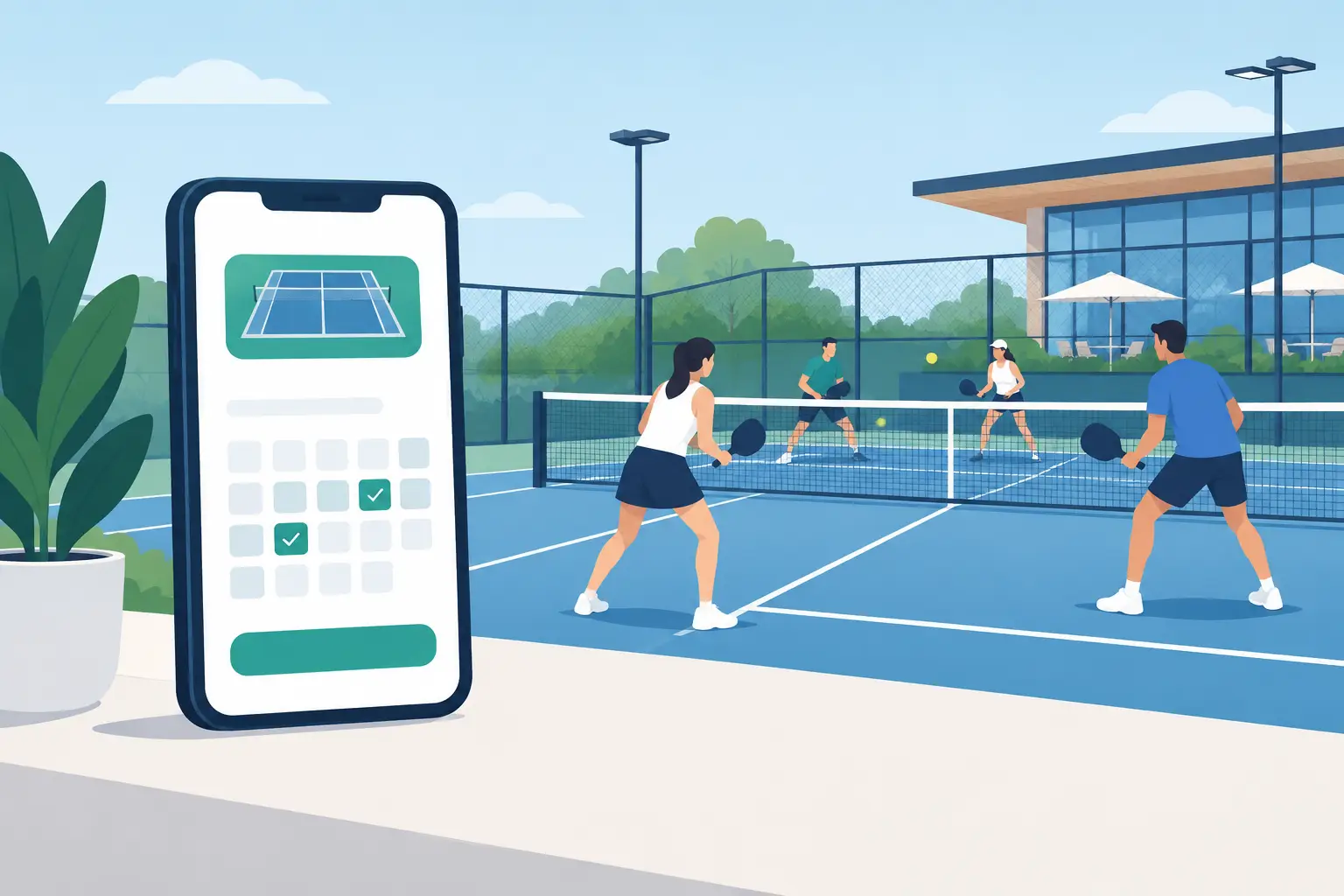
A court sitting empty at 6:00 p.m. while three members are texting the front desk for availability is more than a scheduling problem. It affects revenue, member satisfaction, staff time, and the energy of your sports community. The right court reservation tools turn that daily scramble into a clear, self-service experience for players and a controlled operating system for your club.
For racquet clubs, academies, Parks and Recreation facilities, and HOAs, booking is rarely just about finding an open court. You may need to apply membership rules, collect guest fees, limit peak-time use, reserve space for lessons, and make sure league play does not collide with open recreation. A simple calendar can show availability. A connected reservation system helps you run the facility.
What Court Reservation Tools Need to Solve
The best booking experience feels easy for the player because the facility has done the hard work behind the scenes. A member should be able to open an app, see open times, reserve a court, invite friends, and know what they owe without calling, emailing, or waiting for staff confirmation.
For operators, the requirements are more detailed. Courts may have different hours, surfaces, lighting fees, or eligibility rules. A pickleball facility might allow 60-minute reservations during peak hours but longer bookings during the afternoon. A tennis academy may need to protect court blocks for private lessons, junior programming, camps, and team practices. An HOA may give residents priority while allowing a limited number of guest reservations.
Court reservation tools should accommodate those differences without forcing staff to manually monitor every booking. The goal is not to remove human service. It is to free your team from repetitive corrections so they can welcome players, support programs, and solve the exceptions that actually need attention.
Start With Rules, Not the Calendar
Many clubs adopt a booking tool because they need an online calendar quickly. That is understandable, but the calendar is only the visible layer. Before choosing a system or setting up your reservation flow, define the rules that make your facility fair and sustainable.
Decide who can book, how far in advance they can book, how long they can hold a court, and whether they can reserve more than one peak-time slot at once. Determine what happens when a player cancels late or does not show. These policies are not minor details. They protect access for members and prevent your most popular hours from being controlled by the fastest repeat bookers.
Your rules should also account for the way your club actually operates. For example, a public recreation center may prioritize broad community access, while a private club may reward membership tiers with earlier booking windows. Neither approach is automatically better. The right model depends on your facility capacity, membership promise, programming schedule, and local demand.
Once policies are clear, the system should apply them automatically. Staff should not have to remember whether a player is eligible for a 7:00 p.m. slot or whether a guest fee is due. Consistency builds trust, especially when courts are scarce.
Protect program time without hiding availability
Lessons, clinics, leagues, ladders, and tournaments all compete for the same physical space. If program blocks live in one spreadsheet while member bookings live in another system, double-bookings are almost inevitable.
Look for a reservation setup that displays blocked time clearly and keeps court inventory connected to your operating calendar. Players do not need to see every internal detail, but they should be able to understand why a court is unavailable. A simple label such as “Junior Academy” or “League Match” reduces confusion and cuts down on calls to the desk.
Make Payments and Membership Status Part of the Booking Flow
A reservation that is disconnected from payment collection creates more work after the booking is made. Staff must chase guest fees, reconcile court charges, and determine whether a player’s membership is current. That may work at low volume, but it becomes expensive and frustrating as activity grows.
A stronger setup connects reservations with member profiles, payment methods, and access rules. When a player books, the system can recognize whether they are a member, whether their plan includes court time, and whether a guest or facility charge applies. The player sees the requirement before confirming, not in an awkward conversation after playing.
This matters for more than revenue collection. It gives operators cleaner reporting. You can see which courts are busiest, which hours drive paid bookings, how often guests visit, and whether certain membership plans are being used as intended. Those insights help with staffing, pricing, maintenance planning, and future expansion decisions.
There is a trade-off to consider. Overly complex fee structures can confuse players and discourage use. If you charge different rates by court, time, member tier, lighting, and guest status, make the total obvious before checkout. Good policies should be fair to the business and easy for the community to understand.
Court Reservation Tools Should Work on Mobile
Players often decide to play between meetings, after school, or while sitting in the parking lot. A desktop-only reservation process puts unnecessary friction in front of that decision. Mobile access lets players check availability, reserve a court, join a waitlist, receive updates, and manage cancellations where they already manage the rest of their day.
Mobile booking also helps facilities reduce empty courts caused by late cancellations. If a player can cancel in seconds, another player has a chance to claim the time. Automated notifications can alert interested players when a prime slot reopens, creating a more active and responsive club community.
That said, mobile convenience should not mean limited administrative control. Managers still need a full operational view of bookings, court utilization, player history, and exceptions. The best systems offer simple player actions alongside staff-level controls for the people running the facility.
Connect Reservations to the Rest of Club Operations
Standalone booking software can solve one immediate problem. But it can also create another login, another customer list, another payment record, and another place for staff to check before answering a player’s question.
A connected platform brings reservations into the same environment as memberships, lessons, coaches, leagues, tournaments, team activity, check-in, and event calendars. That connection matters when a coach needs recurring court time for private sessions, when a tournament director must block courts for match play, or when a captain is coordinating a team practice before league night.
With A2M Sports, clubs can manage court and shared-space reservations alongside the programs that create repeat participation. A player’s path can move naturally from booking a court to joining Rec Play, entering a local event, tracking scores, or connecting with other athletes. For operators, that means less switching between tools and more visibility into the full community.
Use Data to Improve Access, Not Just Fill Slots
Reservation data becomes valuable when you use it to make better decisions. If your courts are full every weekday from 5:30 to 8:30 p.m., the issue may not be a lack of demand. It may be that current policies are concentrating demand into a narrow window. Shorter peak-time reservations, waitlists, member booking limits, or additional organized play options may improve access without adding a single court.
If morning courts remain open, consider whether programming, pricing, or communication can bring more players into those hours. Retirees, remote workers, homeschool groups, and private lesson clients may respond to different offers than evening league players. The data gives you a starting point, but your community knowledge tells you what to test.
Track no-shows and cancellations as well. A strict penalty may reduce no-shows, but it can also feel punitive if your cancellation window is unrealistic. A reasonable policy, clear reminders, and an easy way to release a court often produce better long-term behavior than heavy enforcement alone.
A Better Booking Experience Builds a Better Club
Players remember whether getting on court feels fair. They notice when they can reserve time without calling, when fees are clear, and when a canceled slot becomes available instead of disappearing into a staff inbox. Those small moments shape whether a facility feels organized, welcoming, and worth returning to.
Set up your court reservation tools around the real rhythm of your club, then review the results after the first few busy weeks. The right system should give staff more control, give players more confidence, and keep more people doing what they came to do: play.