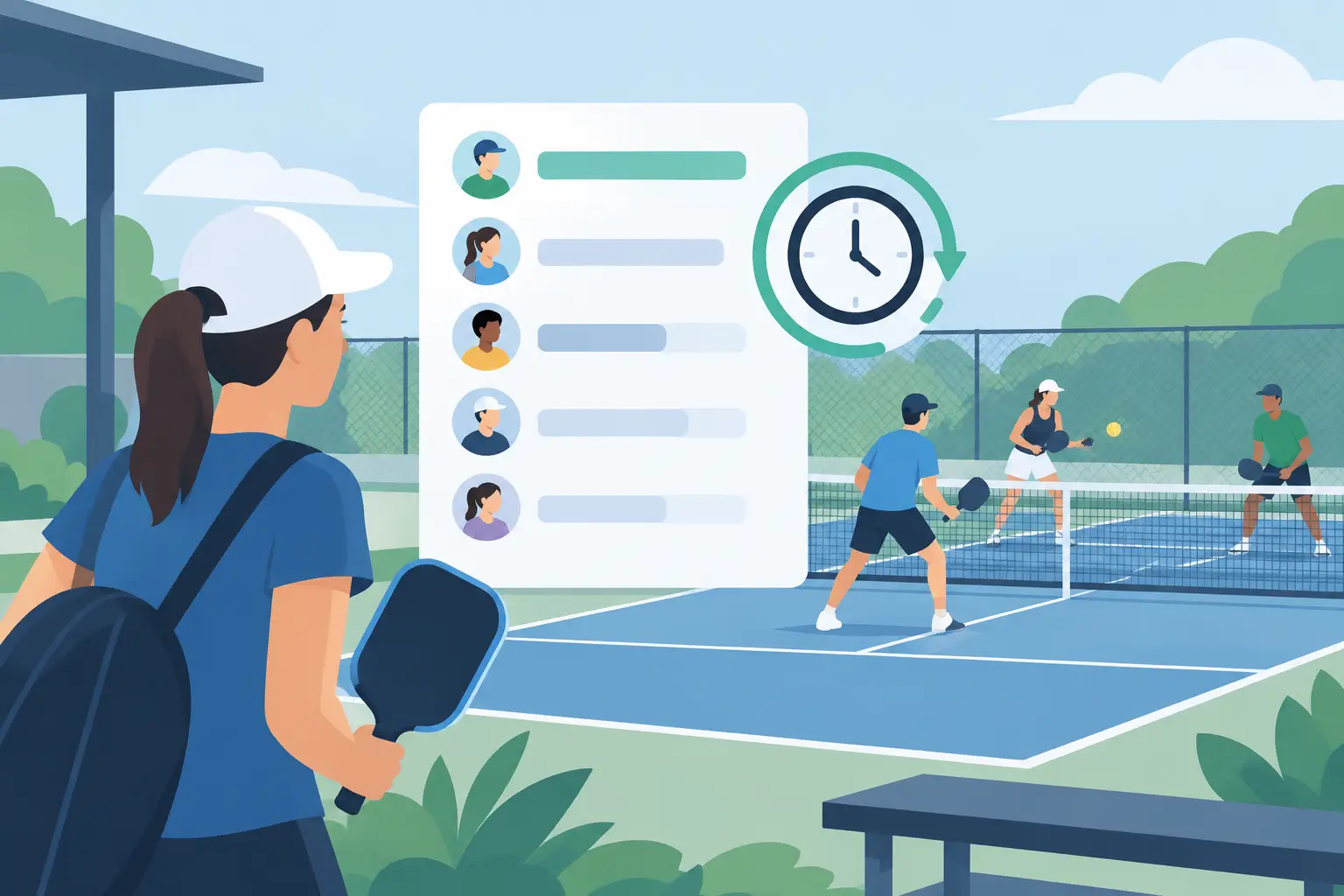
A 6:00 p.m. court cancellation should create an opportunity, not a front-desk scramble. When a popular court opens at the last minute, court waitlist management determines whether that time becomes revenue and playtime or sits empty while staff scroll through texts, emails, and handwritten names.
For clubs, academies, parks departments, and HOAs, a waitlist is more than a backup list. It is a fairness policy, a member-service tool, and a practical way to keep limited court inventory working harder. The difference comes down to how clearly the process is designed and how quickly players can act when a spot opens.
Why Court Waitlists Break Down
Many facilities begin with good intentions: add interested players to a spreadsheet, take names at the desk, or ask members to call back later. That approach can work for a quiet weekday morning. It fails when demand rises, cancellations happen close to game time, and several players believe they were promised the same court.
The operational problem is rarely the list itself. It is the lack of a shared process around it. Who gets priority: the first person to join, a member with a particular access level, or someone who has already been waiting for a comparable court? How long does a player have to respond? What happens if the player declines? Without answers built into the workflow, staff become referees before anyone has stepped on the court.
Manual waitlists also hide useful information. A club may know its prime-time reservations are full, but not how many players wanted a spot, how often cancellations were filled, or which times create the most unmet demand. Those patterns should inform programming, membership policies, court expansion decisions, and lesson schedules.
Build Fair Court Waitlist Management Rules
The best court waitlist management starts with rules players can understand in one read. Fair does not always mean identical treatment. A private club may give members priority over guests. A public recreation facility may need a first-come, first-served policy. A racquet academy might reserve select times for juniors, leagues, or lesson programs. The right policy depends on the facility's mission and its existing booking rules.
What matters is consistency. Publish the order of the queue, eligibility requirements, response windows, and no-show consequences before players join. If the rules change for a special event or holiday schedule, say so early and apply the exception to everyone.
A dependable policy usually addresses four decisions:
- Who can join a waitlist, including members, guests, teams, and program participants.
- How priority is determined, whether by sign-up time, membership tier, or program eligibility.
- How long a player has to accept an opening before the offer moves to the next person.
- What happens when a player repeatedly accepts and does not use the reservation.
Keep the rules practical. A five-minute acceptance window may fill a court quickly, but it can frustrate players in meetings, on the road, or away from their phones. A 30-minute window may be more reasonable for an opening two days out, while a short window makes sense for a court becoming available in the next hour. Match the response time to the urgency of the opening.
Automate the Moment a Court Opens
Speed is where a connected reservation system earns its place. When a player cancels, the open court should immediately trigger the next step: identify eligible people on the waitlist, notify them, record their response, and move through the queue if they pass or do not respond.
Mobile notifications are especially valuable for same-day openings. Players are more likely to claim a court when they can see the offer and confirm from their phone rather than calling the facility. The notification should be specific: court number, date, start and end time, booking type, cost if applicable, and the deadline to accept. Vague messages create more questions and more work for staff.
Automation also protects fairness. Staff should not have to remember who called first, compare multiple notes, or make judgment calls under pressure. The system records the queue position and acceptance activity, creating a clear history when a player asks why an offer went to someone else.
That does not mean every reservation needs to be handled the same way. A court reserved for a league match may require confirmation from a captain. A doubles group might need a named organizer to accept on behalf of the group. A junior program slot may be held for a family until a defined release time. Good software supports these variations without forcing staff back into side spreadsheets.
Connect Waitlists to Payments and Memberships
An open court is not fully booked until the reservation, player eligibility, and payment requirements align. If a player accepts a waitlist offer but cannot complete required payment, the court may remain in limbo and the next person loses valuable response time.
Connect waitlist offers to the same membership and payment rules used for regular bookings. Members should see the rate they qualify for. Guests should be prompted for the information your facility needs. If a cancellation fee or credit policy applies, it should be clear before a player confirms.
This connection is also useful when policies vary by court or time. A facility may offer free member court time during off-peak hours, charge a premium during prime time, or require an additional fee for lighted courts. The waitlist process should carry those rules forward automatically so staff do not need to recalculate charges after every accepted offer.
A2M Sports helps clubs keep reservations, memberships, payments, events, and player communication in one operational environment. That matters because waitlist management is not an isolated feature. It touches the same player records and court schedules used for leagues, lessons, tournaments, and everyday play.
Use Waitlist Data to Improve Court Access
A full waitlist is not merely a sign of healthy demand. It is a planning signal. Review the data regularly to understand where players are being turned away and whether your booking model is serving the community you want to build.
Start with fill rate: how many canceled reservations are claimed from the waitlist? A low fill rate may point to notification windows that are too short, alerts sent through the wrong channel, pricing resistance, or cancellations that happen too close to start time. A high fill rate during certain hours may show that more court capacity is needed there.
Then look at demand by day, time, court type, and player segment. If weekday evening pickleball courts consistently generate waitlists while weekday mornings do not, consider adding open play, ladder sessions, or a structured league at the right time. If tennis courts are booked but lesson courts are often released, coach scheduling may need a closer look.
Be careful not to react to one busy week. Weather, school breaks, local events, and seasonal participation can distort the picture. Look for repeat patterns over several weeks or months, then test changes with a clear goal. You might adjust reservation windows, add a members-only release period, or create recurring programming that gives players a reliable way to play.
Keep the Player Experience Human
A waitlist can feel like a dead end when players receive no updates. It feels useful when they know their request is active, understand their place in the process, and receive a timely offer when a court becomes available.
Confirmation messages should set expectations without overpromising. Tell players that joining a waitlist does not guarantee a reservation, explain how offers are sent, and make it easy to leave the list if their plans change. If your system can show queue position, use that carefully. Position is helpful, but it may change when eligibility rules, group bookings, or different court preferences apply.
Staff still have a role, particularly for members who need help with mobile tools or have questions about policy. The goal is not to remove the human side of club service. It is to stop asking employees to manually chase people for every opening. With a clear process in place, staff can spend more time welcoming players, supporting programs, and solving the exceptions that truly need attention.
A well-run waitlist turns disappointment into a second chance to play. Set the rules clearly, move offers quickly, and let every released court create the next good experience in your sports community.